

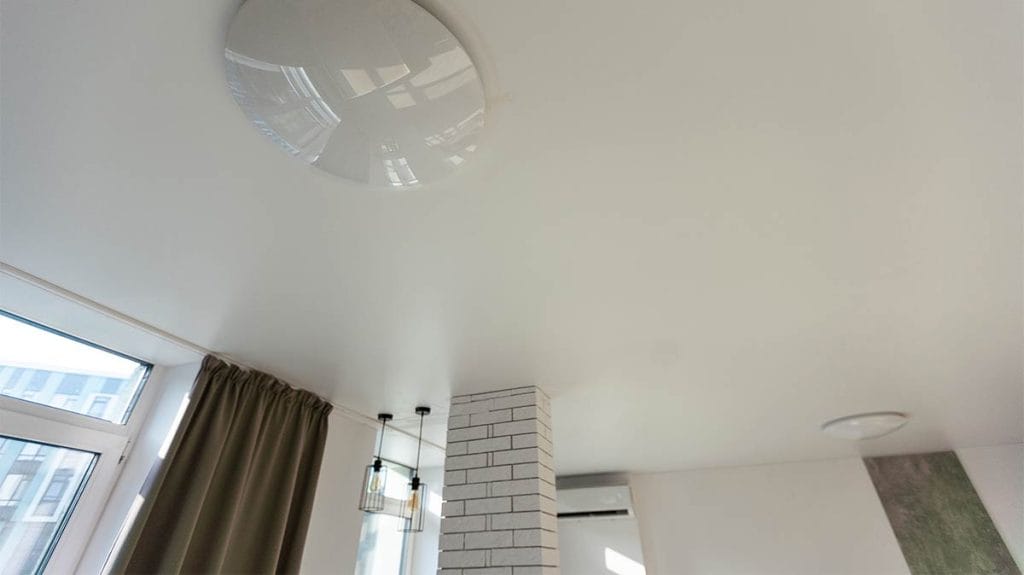
Did you know that your ceiling is quietly collecting grime day after day without you even noticing? Stains vary from dust and cooking grease to smoke residue and water marks.
When you discover these stains, you probably want to start scrubbing endlessly. Most people do. But that only makes things worse.
Fortunately, you’re in the right place, so read on to find out exactly how to clean a ceiling without leaving marks.
The first thing you should do is to assess what you’re dealing with. Knowing how to clean ceilings starts with knowing the type you have.
Most Aussie homes have painted plasterboard. They’re smooth and relatively forgiving. If yours has a texture like popcorn or stipple, you’ll need gentler methods.
Next, evaluate the paint condition. Is it glossy or flat? Flat paint rubs off easily whenever you’re heavy-handed. Look for any flaking or peeling areas.
Finally, make sure to identify your stains. Dust is easy, grease is trickier, and water damage might mean bigger problems. Each needs a different treatment.
On a side note, regardless of whether it’s your property or you’re renting it and moving out, you should always follow the top-to-bottom tip. That means to always start your cleaning from the ceiling.
What is the best thing to clean ceilings with, you ask? Well, a few clean microfibre cloths, a soft sponge, warm water, and mild dish soap should be enough.
For particularly stubborn marks on your ceiling, mix one part vinegar with three parts water to clean them.
You should also have a solid ladder to reach the ceiling. A duster with a long handle will also come in handy, or maybe a vacuum with a gentle brush extension.
Before you start, move furniture aside or cover it with protective cloths, and shield lighting setups using plastic bags fastened by elastic bands.
While you’re working, you need to prioritise safety, so confirm ladder steadiness, skip excessive stretching, and cut power to those ceiling lights. Additionally, don protective eyewear.
Cleaning ceiling dust properly means doing this before introducing any water to the area. This prevents turning dust into muddy streaks.
Use a long-handled duster that has a microfibre head on it. Begin at one corner, then sweep across with strokes that overlap each time. Focus on trapping the dust right in those fibres instead of just flicking it off into the air somewhere else.
A vacuum fitted with a soft brush attachment does an amazing job here. Suction draws the dust straight away rather than scattering it everywhere like brushing alone often does.
Give special care to the corners, plus the areas right around light fixtures. Divide the ceiling into sections, tackle one at a time, and build in short breaks—your arms tire out surprisingly fast from holding them up.
How you clean ceiling stains highly depends on what caused them. For instance, everyday grime can easily be wiped away with a damp cloth.
For greasy marks, use warm water mixed with some dish soap. Simply dip a cloth into the solution, wring it out well, then gently dab the stain and leave the spot to air-dry.
Tobacco is a bit tricky in comparison as it requires more patience from you. To tackle it, mix vinegar in an equal amount with water. Then carefully wipe outward, then inward to avoid spreading the stain.
Another common stain on your ceiling is called a ghost mark, which is basically a dust shadow from air currents forming these visible patterns. Luckily, getting rid of ghost marks on ceilings only requires gentle washing.
For minor mould issues, mix vinegar with water in a weak solution. Apply it with a spray bottle, let it sit for about 5 minutes, then wipe away. To protect yourself from the mould or any fumes, you can wear protective gear while working. With a vinegar-and-water solution, by the way, you can also wash your walls.
Dealing with water damage requires more investigation, though. What matters most is checking the extent of the issue. This is quite important because if the underlying plaster gets significantly wet, it will be ruined.
Sometimes, water marks need a sealing primer before repainting. When the plaster seems spongy or breaks apart easily, bring in an expert.
Kitchens and bathrooms with serious grime or mould could require industrial-strength products or a cleaning service. A professional opinion is your safest bet in this case.
Always do a patch test in a hidden spot before treating the entire surface so you don’t end up ruining your entire ceiling.

Do you have more than just ceilings to clean? We’ll handle it.
A full wash shouldn’t be your first step. Most ceilings only need light spot cleaning, and washing the entire surface is only necessary if you’re dealing with heavy build-up.
If a gentle wash is required, start by mixing warm water with a small amount of mild soap. Dip a soft microfibre cloth or sponge into the solution, then wring it out thoroughly so it’s just damp, not wet.
Work in small sections, wiping the ceiling using soft circular motions. Keep your pressure light and even so you don’t damage the paint. Also, to avoid streaks or scuffs, don’t use hard sponges, scrubbing pads, and stiff brushes.
If you notice some lingering soap residue, go over the area again with a clean, damp cloth rather than adding more soapy solution.
For mould or mildew, use a diluted vinegar and water solution for light surface growth only. Apply it lightly and wipe gently with a clean cloth. Never soak the ceiling. If mould keeps returning or covers a larger area, it’s best to seek professional treatment.
Furthermore, here’s what you should do for different types of ceilings:

The easiest way to clean ceiling fans is by using a pillowcase. First, remember to turn the power off, then slide the pillowcase over each blade and pull it back.
The dust will stay inside it instead of falling on your head. Next, wipe the blade tops with a slightly damp cloth and dry immediately.
For light fixtures, remove them if possible and wash them in soapy water, then wipe them carefully with a barely damp cloth. Never spray cleaner directly onto fixtures.
Cornices collect dust in grooves. Use a soft brush vacuum attachment for crevices, then follow with a lightly damp cloth. Be extra careful, as drips create obvious streaks.
Patience is key here. Proper drying is crucial to effectively clean ceilings without leaving marks. Rush this, and you’ll see streaks appear.
Open windows wide, throw doors open too, and get that air moving. When it’s humid outside, turn on the air conditioner or use a dehumidifier for faster drying.
Once everything is completely dry (it takes about 30 minutes), ceiling fans can spin again. But never blast heaters or fans straight at the damp patches.
Understanding the causes makes prevention easier. It’s the long-term secret to effectively clean ceilings without leaving marks.
Dust is always in the air. It lifts from floors, drifts in through open windows, and eventually settles on everything, even the ceiling.
Cooking grease doesn’t linger down by the burners for long. Those superheated oil specks actually lift off right away, carried straight up by rising steam, then plaster themselves onto the ceiling and any surfaces above.
This explains how kitchens get that gross, dark film up top in no time.
Smoke adds to the problem. Particles drifting from candles, wood fires, or cigarettes just float around before they settle bit by bit and darken the paint everywhere.
Then you’ve got moisture stirring up its own issues. Bathrooms without decent ventilation let hot, steamy air climb until it smacks into the chilly ceiling. It cools instantly, forms condensation, and leaves behind the exact damp conditions that let mould take hold and spread fast.

Learn from others’ mistakes. Such blunders damage far more ceilings than mere dust ever could. Mastering the easiest way to clean your ceiling hinges on evading these frequent oversights.
Avoid applying excessive moisture. Saturated rags leave streaks and impair the coating. So, ensure the area remains merely moist, not drenched.
Yet another typical challenge involves using harsh compounds. Potent detergents erode layers and provoke uneven fading. Agents like bleach or ammonia are often not required, so choose gentle formulas in their place.
Then there’s scrubbing too hard. It creates friction marks and wears away the paint. Gentle pressure always works better.
Skipping the dusting step causes trouble, too. When you use water over dry dust, grime turns into muddy smears that are worse than the original dirt.
Most homes only really need a proper ceiling clean once or twice a year. Stick to dusting and vacuuming every six months or so, and you’ll almost never have to resort to moisture-based cleaning.
Kitchen ceilings pick up grime way quicker than folks expect, so hit them every three to four months to keep things under control. In bathrooms, make it a habit to check monthly—you’ll spot any mould early that way and stop it before it turns into a headache.
Trust your eyes. If the ceiling looks dingy, clean it. Don’t wait for schedules. But don’t obsess either. Ceilings shouldn’t be treated like floors.
We clean ceiling, walls, floors and much more

Yes, cleaning the ceiling yourself is safe, but only when you adopt simple safeguards. The principles behind wall cleaning that protect paint extend seamlessly to ceilings as well.
Always use a sturdy ladder. Don’t overreach—move it instead. Take breaks when you need them to avoid getting tired and making mistakes.
Professional assistance is recommended for homes with very high ceilings, vaulted layouts, or extensive mould growth. If substantial mould patches appear or strong damp smells develop, arrange for an expert assessment without delay.
Water damage beyond simple stains needs professional attention, too. Soft or crumbling plaster might hide structural issues.
Pros work faster and spot problems you might miss. For regular maintenance of standard-height ceilings, DIY is fine. But for anything beyond that, weigh cost against risk.





The only home improvement newsletter you will ever need!
We will never spam you. Pinky promise!
For more information, check out our privacy policy.