
Oven cleaning experts always say that induction cooktops need to be handled a bit differently from gas or ceramic stoves.
The main difference is the glass surface, where every splash, streak, and smudge is quite visible in comparison to other stove tops. You’re also risking permanent scratches if you’re using the wrong cleaning method.
In Aussie kitchens, it’s usually burnt-on spills, greasy splatter, and persistent water marks that cause trouble. While it may seem simple enough to wipe, your technique matters. So, find out exactly how to clean an induction stovetop the right way.
The best thing about induction cooktops is their slick, elegant look, but that same smooth design makes them pretty vulnerable.
There is a very good reason why you should keep your induction cooktop clean, and it isn’t for appearances.
With constant use, you will find that spills, splatters, and water marks are piling up. After a while, cooking will take a lot longer, eventually producing heavy smoke, too.
You can avoid all this just by giving your appliance some care. The truth is, cleaning induction cooktops needs a little more know-how than regular ranges. Here’s why:
A quick wipe with the wrong tool will leave scratches behind, while jumping in too soon can make burnt-on messes harder to remove. That’s why you need to figure out exactly what you can use to clean an induction cooktop with and what you should avoid.
There are dozens of commercial cleaners in local stores that you can use. However, only a few are specially formulated for glass or induction surfaces. Always read the packaging carefully.
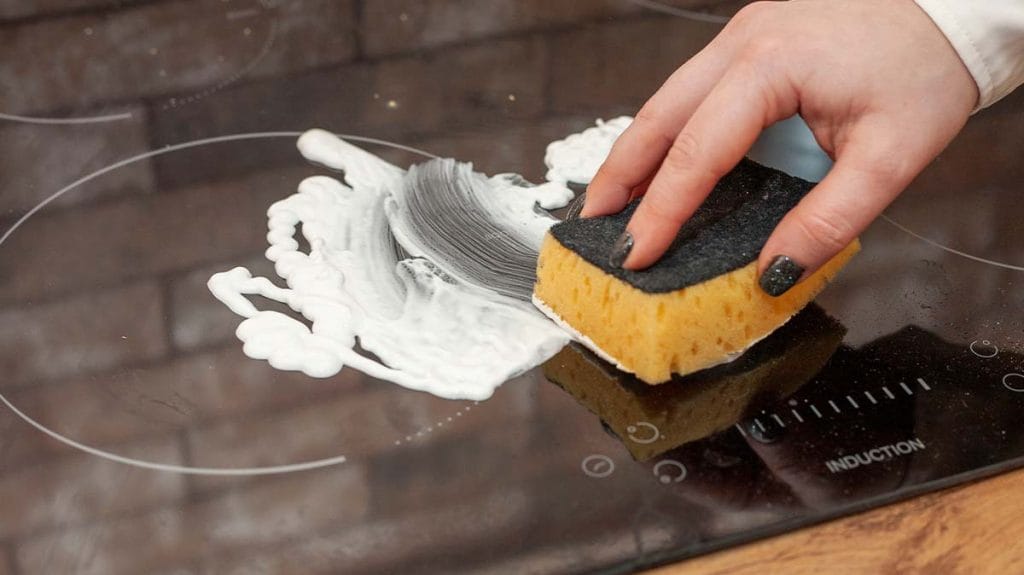
Sprays or creams that lift grease and charred food without scratching are pretty easy to apply. Plus, they often take minutes to work and are perfect for tough stains or heavier build-up, like burnt-on oil after a BBQ or sugary spills.
Luckily, the price of the cleaner is of little importance because essentially any product that’s compatible with glass cooktops or induction surfaces will do.
Alternatively, if you prefer a homemade cleaner, adding warm water to a few drops of mild dish soap is a known favourite. You could also create a spray from a simple vinegar and water mix in equal portions.
These are perfect for light spills and streaks, whereasa thick paste made of baking soda and water is great to tackle tougher stains.
To have a well-rounded idea about the process, think about what you should not use on an induction cooktop.
Steel wool, harsh scouring pads, and stiff brushes are not really your friends as they will scratch up the surface of the stovetop. Ammonia-based cleaners and any chemical cleaner that’s not safe to use on glass will cause heavy damage, too.
Even ordinary sponges turn problematic under heavy pressure, and repeated scrubbing with force creates scuffs that build up gradually. Your cooktop will really appreciate a gentle touch.

Struggling with stubborn buildup on your induction stovetop? Our professional cleaning service will restore that streak-free shine in no time
If you believe that cleaning an induction cooktop is just another demanding chore on your long to-do list, we hear you, but it really doesn’t have to be. Your secret weapon is knowing that you have to use gentle cleaning tools and techniques.
When you do that, the actual cleaning of your induction stovetop becomes easy pease lemon squeezy. . It’s not even a task that will take too much of your time, especially with regular care.
The below items are all you need to clean a glass cooktop:
Addressing light spills immediately stops most induction cooktop issues before they develop.
When you use basic household items, the glass will remain protected from any damage. Cleaning an induction stovetop with vinegar is a popular choice in many Aussie homes. For light spills, follow these steps:
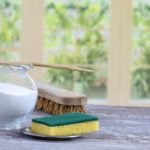
Regular household ingredients are one of the best things you can use to get rid of burn marks on an induction hob.
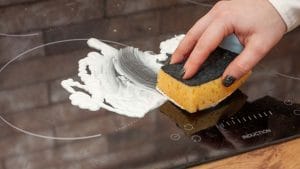
Baking soda and vinegar are ideal for cleaning an induction cooktop burn when combined with the right tools and without applying unnecessary pressure or force as you work. In general, testing scrapers on hidden areas first helps if you’re uncertain about the technique.
Here’s how to clean serious messes burnt on an induction stovetop:
In many parts of Australia, hard water can leave annoying white or cloudy marks on any polished surface. These spots are mineral deposits from water droplets that dry on the glass or metal, but if left too long, they can be difficult to remove.
No real harm comes from these annoying white marks on your induction cooktop, but they dull the original sheen of the glass.
Just follow the steps below to remove cloudy marks on the induction hob safely and effectively:
It’s not one clear answer when it comes to the frequency of cleaning your induction cooktop. But now that you know how to clean it, you should consider a few factors if you want to figure out how often you should do it.
The basic rule is to wipe down the surface of your induction stovetop after every single use. And a more thorough cleaning with the techniques mentioned above should be done every week. That said, the way you cook is a huge factor to consider.
For example, if you lean more towards frying, high-temperature cooking, and rapid pan techniques on a regular basis, oil droplets will always settle across the glass.
What you cook matters just as much, since anything that boils over dries quickly on the surface, like soups and sauces, and would require more attention.
Professional oven cleaners can give you a hand if you’re dealing with stubborn burnt deposits or water marks that won’t budge no matter what you do.
Our oven cleaning team will bring back the sparkle to your cooktop

A few small habits go a long way to maintain the effort you’ve put in cleaning the induction cooktop as follows:






The only home improvement newsletter you will ever need!
We will never spam you. Pinky promise!
For more information, check out our privacy policy.